Few spec-sheet lines cause more confusion — and more failed permit applications — than the EPA tier rating. Buy a Tier 2 generator for a peak-shaving program and you own an expensive paperweight. Pay Tier 4 Final money for a pure emergency standby unit and you may have overspent by 30–50%. This guide explains what each tier means, which one your project needs, and how tiers move prices in the used market.
What Are EPA Tiers?
The EPA regulates emissions from nonroad diesel engines — including generator drive engines — under 40 CFR Parts 89, 1039, and related rules. Since 1996, standards have tightened in stages called tiers, from Tier 1 through Tier 4 Final. Each tier lowers allowable levels of four pollutants: nitrogen oxides (NOx), particulate matter (PM), hydrocarbons (HC), and carbon monoxide (CO).
The tier is certified at the engine, by engine model year and power band — it is not something a dealer can add or change later, although field-installed retrofit aftertreatment can sometimes satisfy local air districts.
Tier-by-Tier Comparison
| Tier | Phase-In (gensets) | Key Technology | Typical Application Today |
|---|---|---|---|
| Tier 1 | 1996–2000 | Basic mechanical injection | Legacy units; emergency-only in most areas |
| Tier 2 | 2001–2006 | Improved combustion, early electronic injection | Emergency standby (grandfathered/allowed by size) |
| Tier 3 | 2006–2011 | Common-rail injection, cooled EGR on some | Emergency standby for many size classes |
| Tier 4 Interim | 2008–2013 | DPF and/or EGR | Transitional; some mobile/rental units |
| Tier 4 Final | 2014+ | SCR + DEF, DPF, advanced controls | Required for non-emergency use; all mobile/rental |
Scale of the change: from Tier 1 to Tier 4 Final, permitted NOx and PM levels fell by more than 90%. A Tier 4 Final engine emits less NOx in a year of typical standby testing than a Tier 1 engine emitted in a week of prime operation.
The Rule That Matters Most: Emergency vs Non-Emergency
EPA rules distinguish sharply between emergency and non-emergency engines:
- Emergency standby: runs only during utility outages plus limited maintenance/testing (generally up to 100 hours per year). These units may be certified to the tier applicable to their engine size — often Tier 2 or Tier 3 — without aftertreatment.
- Non-emergency: prime power, continuous duty, peak shaving, demand response, utility programs, or any scheduled revenue-generating operation. These require Tier 4 Final certification (or site permits with equivalent controls).
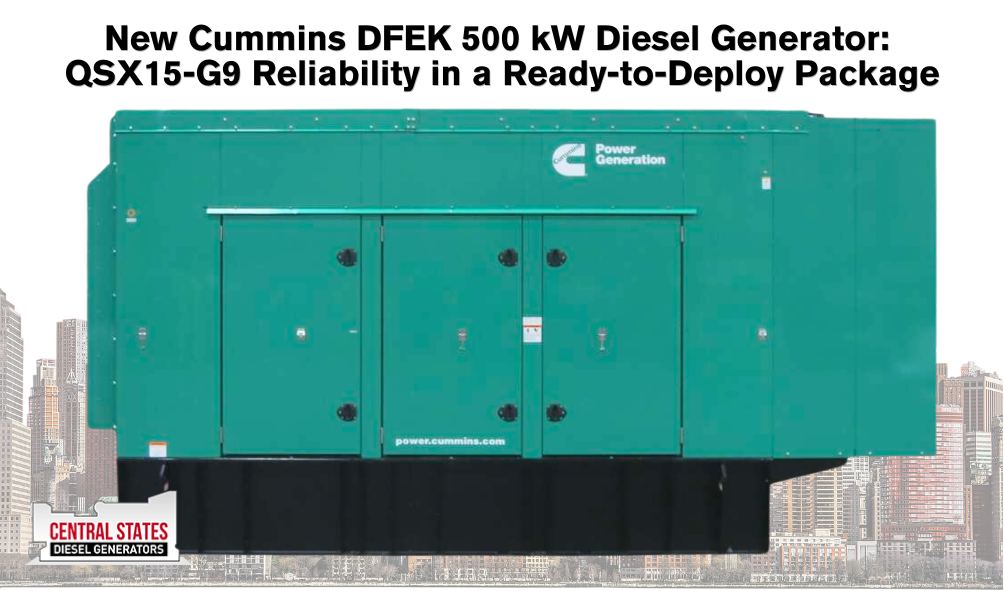
This is why the same 500 kW genset exists in both a Tier 3 ‘standby-only’ version and a Tier 4 Final version costing significantly more. If you ever intend to enroll the unit in a demand-response program, buy the tier for that use on day one — recertifying later is rarely practical.
State and Local Rules Can Be Stricter
- California (CARB): air districts routinely require Tier 4 Final or diesel particulate filters even for standby units; some districts effectively bar new diesel standby below Tier 4. Check the local Air Quality Management District before purchase.
- Northeast states: NY, NJ, and MA impose stricter run-hour limits and, in some cases, aftertreatment requirements for units near sensitive receptors.
- Data center corridors: Northern Virginia, Phoenix, and other high-density markets increasingly condition permits on Tier 4 Final regardless of emergency status.
How Tiers Affect Used Generator Prices
| Tier | Used Market Effect |
|---|---|
| Tier 1–2 | Cheapest per kW; legal for emergency standby in most (not all) jurisdictions; limited resale flexibility |
| Tier 3 | Sweet spot for standby buyers — modern common-rail engines, broad legality, strong value |
| Tier 4 Final | Commands 25–50% premium used; required for rental fleets, prime power, and strict air districts; deepest future resale pool |
A practical rule: if the unit will only ever run when the grid is down, a load-tested Tier 2/Tier 3 unit is usually the best value. If there’s any chance of non-emergency operation — or the site is in California or another strict district — the Tier 4 premium is cheaper than a stranded asset.
How to Verify a Generator’s Tier
- Check the EPA emissions label on the engine (valve cover or block) — it lists the engine family code and certification.
- Match the engine serial number to the manufacturer’s certificate of conformity.
- On used units, confirm the aftertreatment hardware (SCR cabinet, DEF tank, DPF) is present and functional — a Tier 4 engine with removed aftertreatment is not a compliant Tier 4 unit.
- Ask the dealer for the spec sheet showing the certified tier for that exact model year, not just the model.
Frequently Asked Questions
Do I need a Tier 4 generator for emergency backup?
Under federal EPA rules, usually not — a properly certified Tier 2 or Tier 3 unit is generally acceptable for true emergency standby with limited testing hours. However, California and several strict air districts require Tier 4 or added particulate controls even for standby. Always confirm with your local air authority before buying.
What is the difference between Tier 4 Interim and Tier 4 Final?
Tier 4 Interim (2008–2013) cut PM but allowed higher NOx, typically met with a DPF or EGR alone. Tier 4 Final (2014+) added the stricter NOx limit, which most engines meet with SCR aftertreatment and DEF. Interim units are still common in the used rental market at a discount.
Can a Tier 2 generator be upgraded to Tier 4?
The engine’s certification cannot be changed, but retrofit aftertreatment (DPF, SCR) can sometimes satisfy a local air district’s control requirements for a specific site permit. It’s a permitting solution, not a recertification — and retrofit cost often approaches the price difference of simply buying a Tier 4 unit.
Do Tier 4 generators cost more to maintain?
Yes, moderately: DEF consumption (typically 2–5% of fuel volume), periodic DPF cleaning, and more sensors. In exchange, Tier 4 common-rail engines are usually more fuel efficient and quieter than older tiers.
Are there emission rules for natural gas generators?
Yes — spark-ignited engines follow a separate EPA program (40 CFR Part 1048 / JJJJ for stationary units) with their own limits. Natural gas units are often easier to permit in strict districts, which is one driver of their growing share in standby applications.