If you’ve shopped for a used Cummins generator, you’ve hit the alphabet soup: DFEK, DFHB, DFLC, DQGAA, DQKAN. These codes aren’t random — they’re Cummins’ internal model designations, and once you can read them, a listing tells you the kW class, engine platform, and generation of the unit at a glance. This guide decodes the most common models on the market, explains the newer C-series naming, and shows you how to verify everything on the dataplate.
How Cummins Generator Model Codes Work
- Model code (e.g., DFEK, DQFAD): identifies the genset family and frame size. The first letters group the series (DF, DQ, etc.); later letters distinguish frame/rating/engine variants within the series.
- Spec letter (e.g., DFEK-A vs DFEK-D): a suffix on the dataplate marking the engineering revision — controls, alternator, or emissions updates. Parts and wiring diagrams are spec-letter specific, so always record it.
- Model spec sheet: every code has a published spec sheet (e.g., ‘DFEK spec sheet’) listing standby/prime ratings, engine, alternator options, and fuel data — the definitive reference for that model.
Cummins Diesel Generator Model Code Decoder
Approximate 60 Hz standby ratings for the most common models in the North American used market. Exact ratings vary by spec letter, voltage, and build — always confirm against the unit’s dataplate and spec sheet.
| Model Code | Approx. kW (Standby) | Engine | Notes |
|---|---|---|---|
| DGDB / DGFC class | 60–150 kW | 6BT/6CT (5.9–8.3L) | Small commercial frames |
| DFAB / DFBC class | 230–350 kW | NT855 / LTA10 | Legacy mid-range |
| DFCE class | 350–400 kW | NTA855 | Common legacy 350s |
| DFEJ / DFEK | 450–500 kW | QSX15 (15L) | Very common data center pull; DFEK = 500 kW |
| DFGB | 600 kW | VTA28-G5 (V12) | Proven mechanical workhorse |
| DQCA | 600 kW | QSK23 | Modern inline-6 platform |
| DQCB | 750 kW | QSK23 | Data center staple |
| DFHA–DFHD class | 700–900 kW | KTA38 (V12) | Legacy 750–800 kW frames |
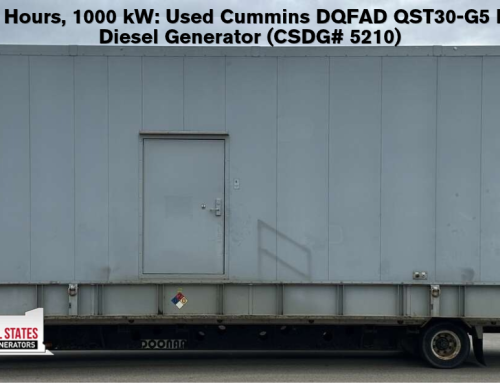
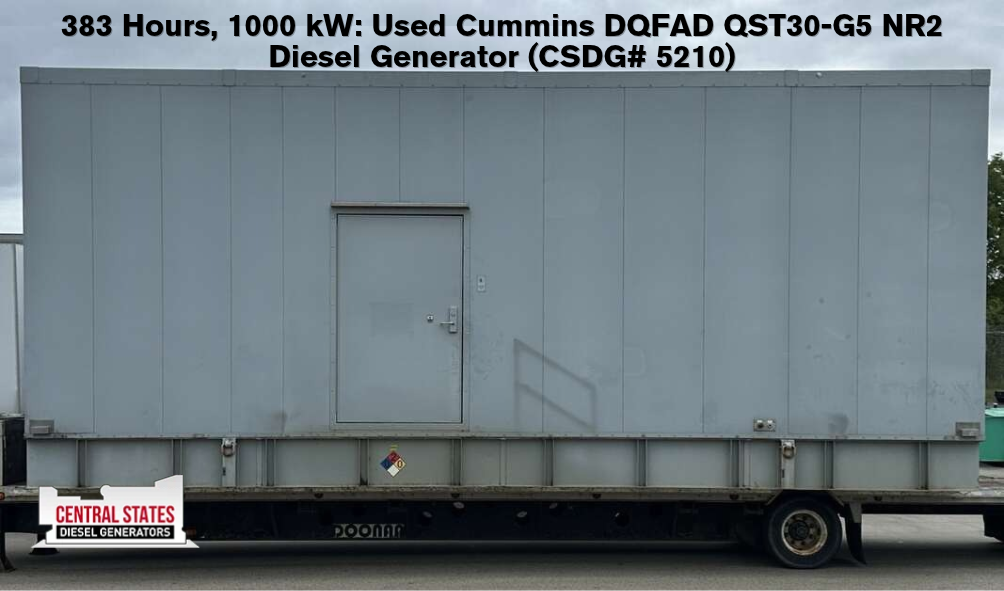
| DQFAA–DQFAD | 900–1,000 kW | QST30 (V12) | DQFAD = 1,000 kW |
| DFLB | 1,100 kW | KTA50 (V16) | Legacy MW-class |
| DFLC | 1,250 kW | KTA50 (V16) | Abundant used supply |
| DFLE | 1,500 kW | KTA50-G9 (V16) | Top of KTA50 range |
| DQGAA | 1,250 kW | QSK50 (V16) | Modern 1.25 MW |
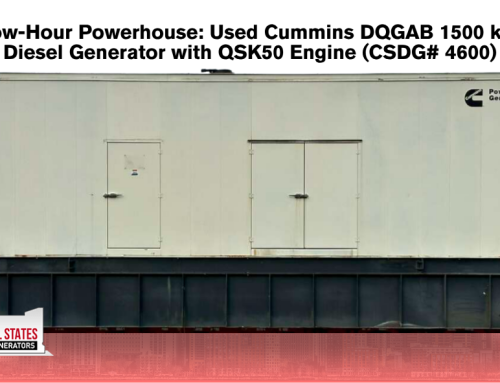
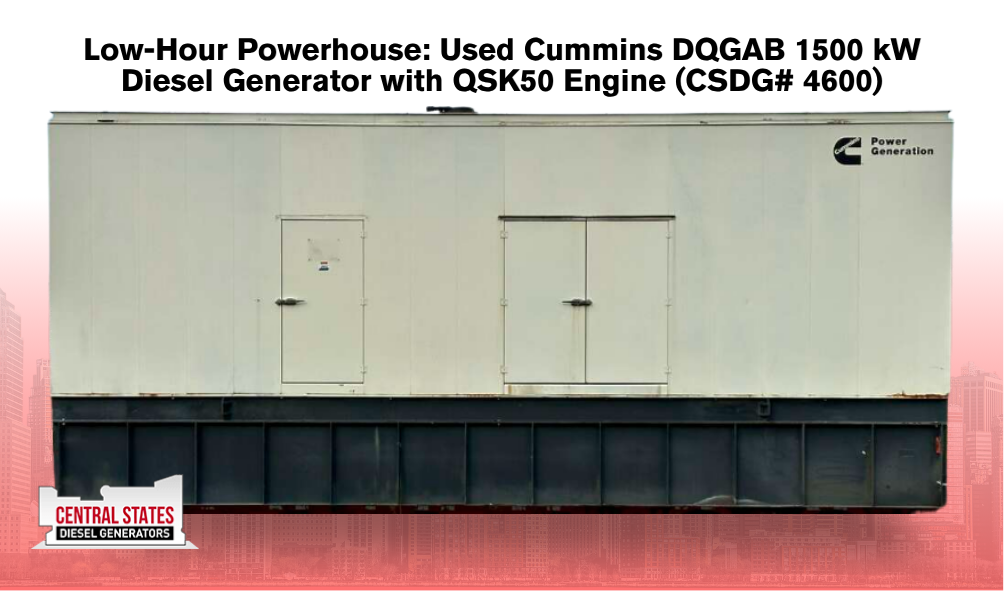
| DQGAB | 1,500 kW | QSK50 (V16) | Modern 1.5 MW |
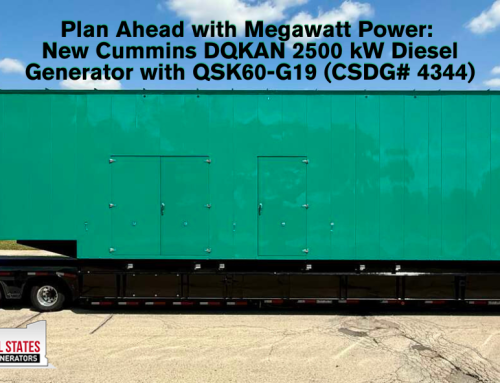
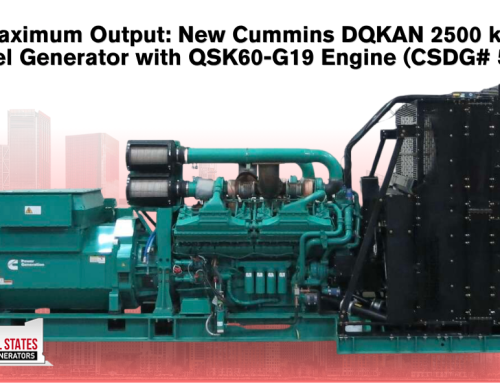
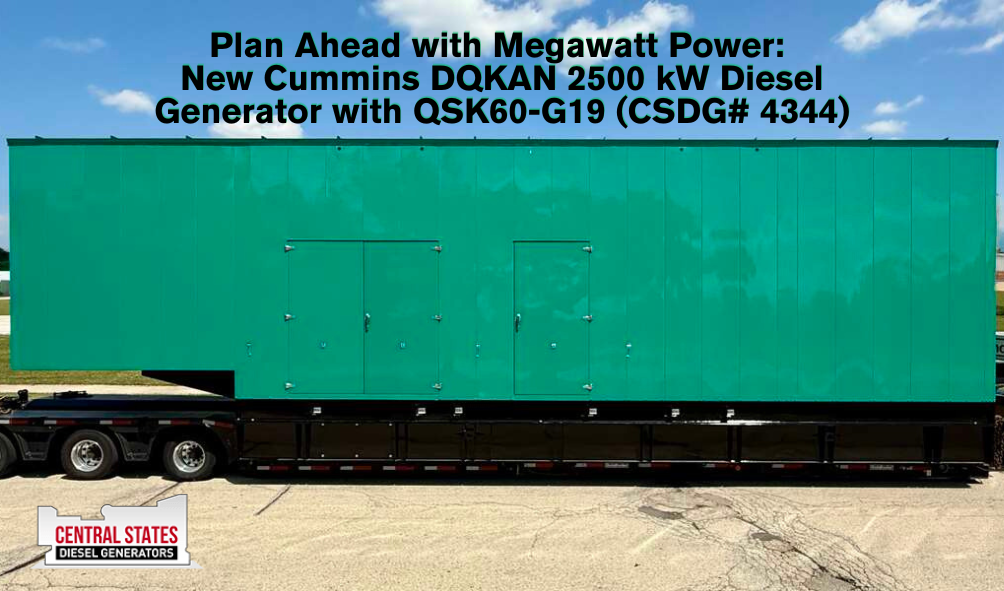
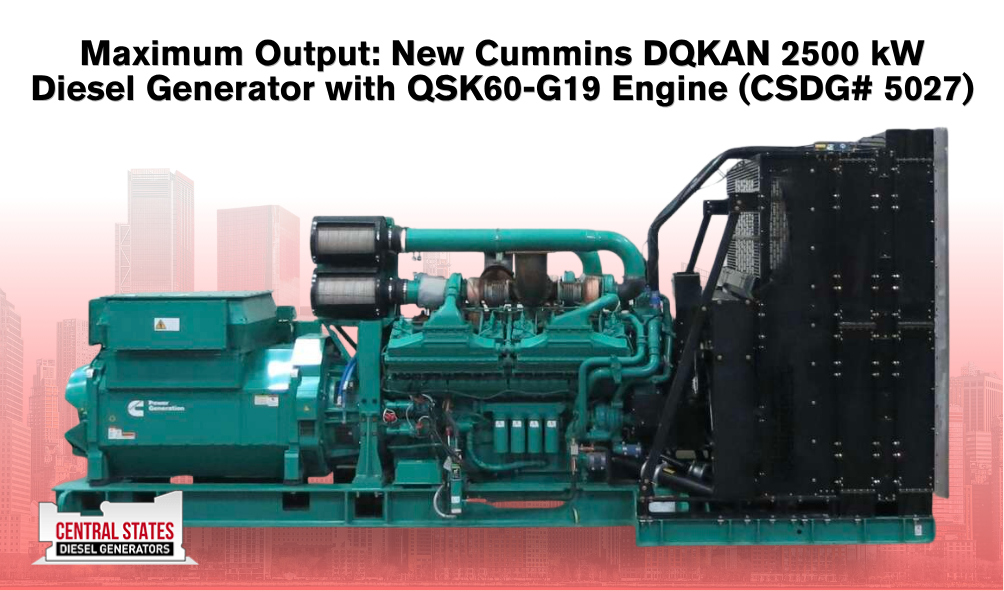
| DQKAB / DQKAN class | 2,000–2,500 kW | QSK60 / QSK78 | Hyperscale frames; DQKAN = 2,500 kW |
The Newer C-Series Naming (Much Easier)
Since the mid-2010s, Cummins has shifted to self-explanatory model names for many products:
| Example | Decoded |
|---|---|
| C150D6 | 150 kW, Diesel, 60 Hz |
| C1000D6E | 1,000 kW, Diesel, 60 Hz, revision/emissions variant |
| C3000D6E | 3,000 kW, Diesel, 60 Hz (QSK78-powered) |
| C25N6 / C125N6 | 25 kW / 125 kW, Natural gas, 60 Hz |
| 625GFJB | Legacy gas naming: 625 kW natural gas frame |
Pattern: C + kW + fuel (D diesel, N natural gas) + frequency (6 = 60 Hz, 5 = 50 Hz), sometimes followed by a build letter. When you see both styles in listings, remember they can describe the same machine generation — dealers often list the four-letter code because that’s what’s stamped on older dataplates.
How to Read a Cummins Genset Dataplate
- Model: the code (e.g., DFEK) plus spec letter — the pair that defines your parts books.
- Serial number: needed for Cummins distributor lookups, warranty history, and controller configuration files.
- Ratings block: standby and/or prime kW/kVA at stated voltage, Hz, power factor, and ambient — note which rating class is stamped.
- Engine + alternator plates: separate plates on the engine block and alternator frame; verify all three match the paperwork on a used unit.
Buying used? Photograph all three plates and ask the seller for the spec sheet PDF matching the model + spec letter. Mismatched plates are a red flag for a repowered or rebuilt-from-parts unit — not necessarily bad, but it must be priced and documented as such.
Which Cummins Models Are the Best Used Buys?
- Best availability: DFEK (500 kW) and DQCB (750 kW) — data center refresh cycles keep low-hour units flowing to market.
- Best budget value: DFGB (600 kW) and DFLC (1,250 kW) — older mechanical platforms, deeply proven, cheap parts.
- Best MW-class: DQGAA/DQGAB (QSK50) for modern electronics, DFLE (KTA50) for value.
- Watch the controls: PowerCommand generation matters — PCC3201/3.3-era controllers on newer specs integrate more easily with modern switchgear than early PCC3100 units.
Frequently Asked Questions
What does Cummins DFEK mean?
DFEK is the model code for Cummins’ 500 kW standby genset built on the QSX15 engine. The spec letter after the code (DFEK-A through later revisions) identifies the engineering revision. Its spec sheet lists standby/prime ratings, alternator options, and fuel consumption.
What engine is in a Cummins DQCB?
The DQCB (750 kW standby) uses the Cummins QSK23, a 23-liter inline-six with full-authority electronic controls, typically paired with PowerCommand PCC3300-family controllers.
What is the difference between DFLC and DQGAA?
Both are 1,250 kW frames. The DFLC uses the older mechanical KTA50 V16; the DQGAA uses the electronic QSK50 V16 with modern controls and emissions options. DFLCs cost less used; DQGAAs integrate more easily into modern paralleled systems.
Where do I find a spec sheet for my Cummins model code?
Search the model code plus ‘spec sheet’ or request it from any Cummins distributor with your serial number. Match the spec letter — ratings and wiring differ between revisions.
What does the spec letter on a Cummins generator mean?
It tracks the engineering revision of that model — changes to the engine emissions build, alternator, or control system. Two DFEKs with different spec letters can have different controllers and parts books despite identical ratings.